Certainty as Institutional Design
The craving for certainty is not a personal failing. It is a structural feature of the institutions most people spend their working lives inside. Organizations are built to reduce variance. Budgets require projections. Strategies require assumptions. Performance management requires measurable targets. Every institutional mechanism is, in some sense, a device for converting uncertainty into something that can be planned around.
This is not irrational. Coordination at scale requires shared assumptions about what is going to happen. The problem is that these mechanisms do not just manage uncertainty — they train people to be intolerant of it. After years inside institutions that reward confident prediction and punish acknowledged ignorance, most professionals have developed a deep, largely unconscious aversion to sitting with not-knowing.
Futures education runs directly into this conditioning. Its core proposition — that the future is genuinely open, that multiple futures are possible, that the work is to expand your range of imagination rather than narrow it to a single forecast — is experienced by many participants not as liberating but as threatening. It feels like the educator is withholding something.
Breaking out of the certainty paradigm requires embracing a harder truth: we are living in postnormal times. As Zia Sardar and John Sweeney put it almost two decades ago, 'Welcome to postnormal times!' Postnormal times analysis argues that we are in an environment of accelerating change across sectors — experiencing accelerating speed, scale, scope, and simultaneity of change in technology and globalization. Those forces drive complexity, chaos, and contradiction, accompanied by increased uncertainty and ignorance. Other frameworks have tried to capture this essence of change, including VUCA — Volatility, Uncertainty, Complexity, and Ambiguity — now widely used in business. But postnormal times is more systems-oriented, holding chaos, complexity, and uncertainty together as a single condition rather than a checklist. We are not only interested in futures literacy, but in understanding the driving forces — those tsunamis of change we face today — to understand better how to navigate toward where we want to go.
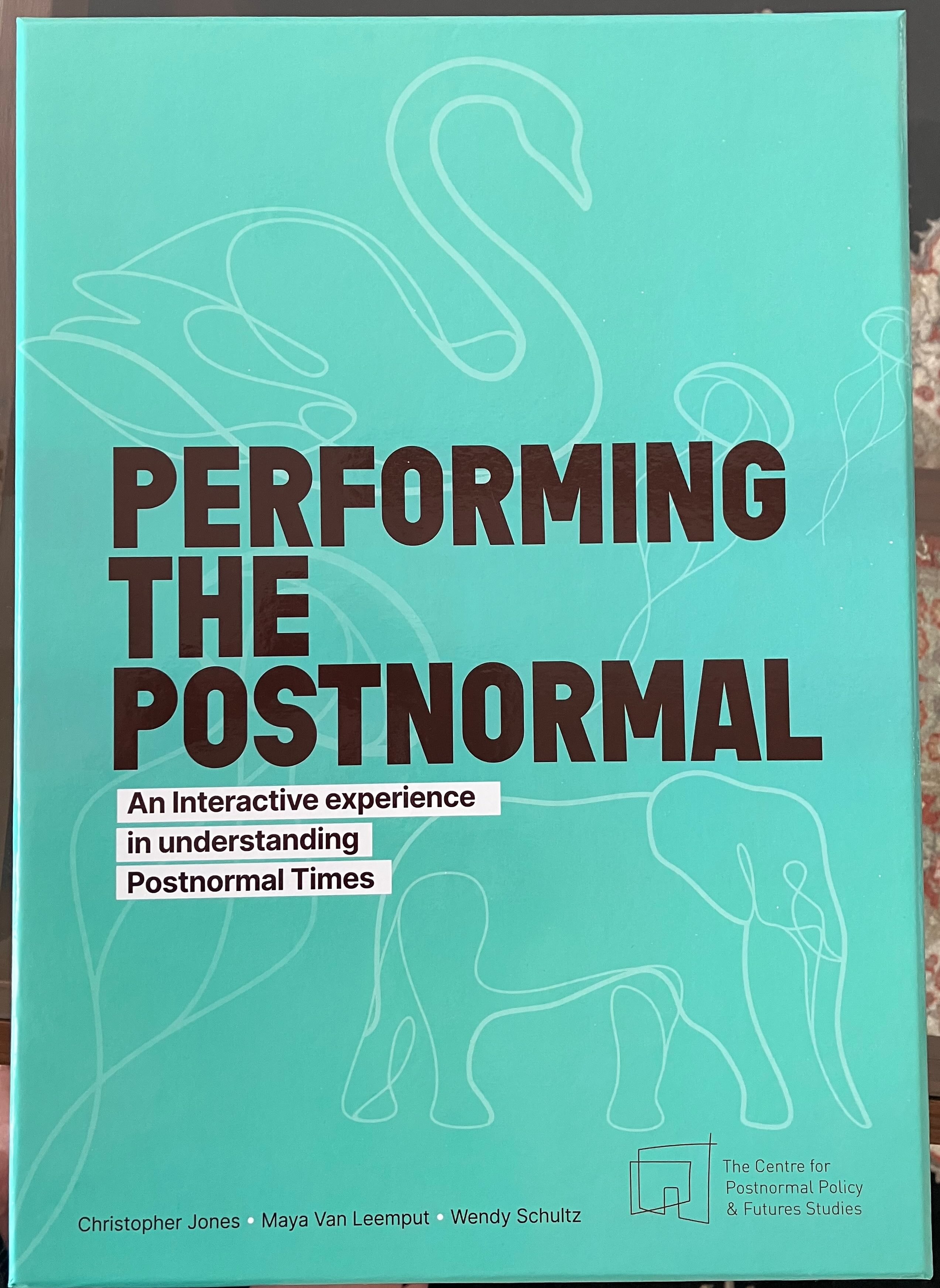
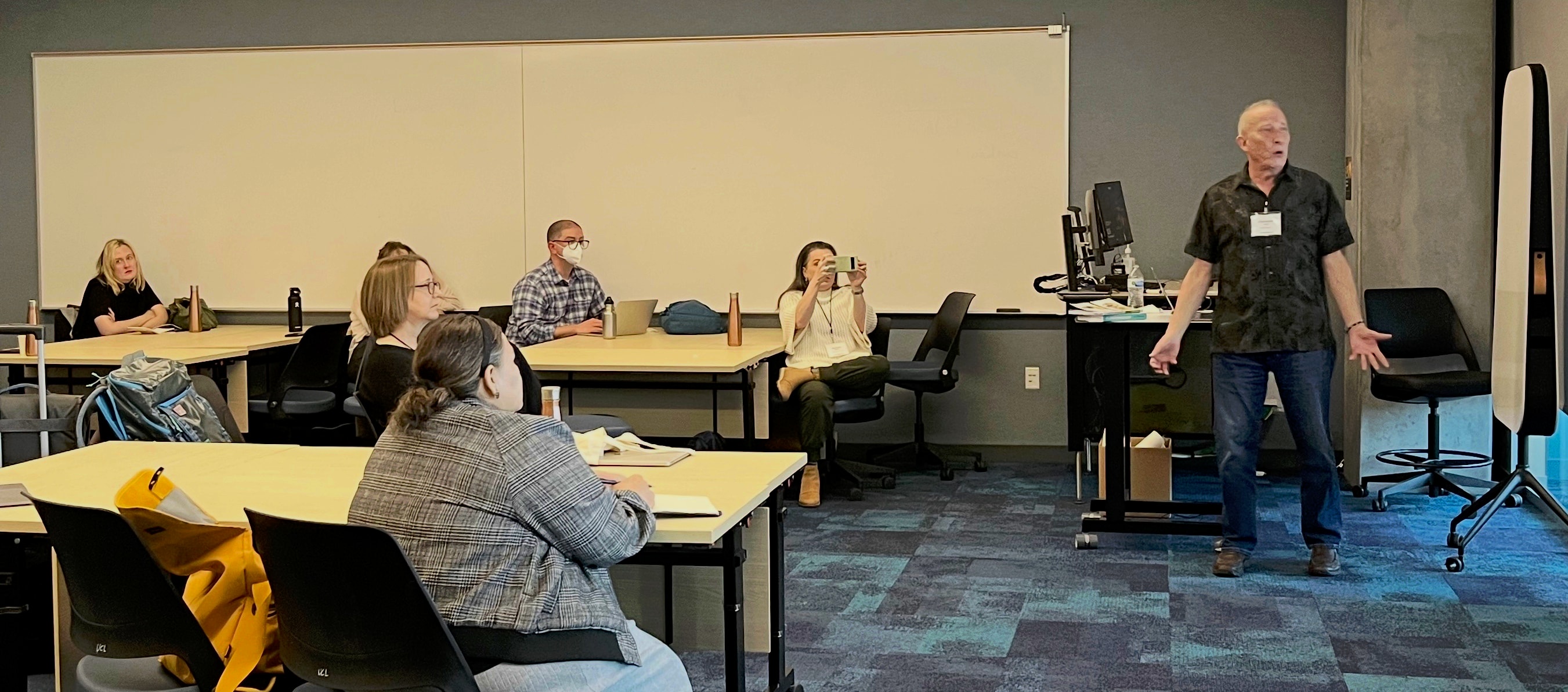
Workshop participants sometimes find this reorientation genuinely destabilizing. Some are unable to suspend their disbelief, physically rejecting and objecting to the process. The challenge is overcoming that disbelief — not by arguing participants out of it, but by creating conditions in which they can experience the postnormal directly. One of the reasons we use the 'Performing the Postnormal' game is precisely this: to immerse participants in a simulated reality of postnormal disruption, where they are asked to live in uncertainty and still make decisions and take action.